Tuesday, August 26, 2014

Don't Teach Your Kids How To Read!

Yep, you read that right. Don't teach them how to read. Most homeschooling parents get sucked into trying to "keep up" with the public school kids. What's wrong with that? Well, you only get the same results the public school gets. Why bring them home for their education if your not going to at least try to do a little better? With my experience working in public schools, I have noticed different learning personalities. If you are replicating public school methods in your home you can expect to have one of four results. The sprinter, the reluctant, the snail, or the studious.

1. The Sprinter knows that if they complete the task presented that they can go on to what ever they want to do. Mom says "As soon as you read 2 chapters you can watch T.V." The child quickly rushes through their work in order to gain the reward. Reading becomes the mean to an end, not something to be enjoyed


2. The Reluctant reader is the student who  may have the ability to learn how to read or even know the basics of reading, but has absolutely no interest in doing it. Even if there is a reward being dangled in front of them the motivation can not be found in order to accomplish the task. Maybe they're a day dreamers. Maybe they find the subject to be boring. Maybe they just don't like being told what to do. This can lead to a child upset and even in tears over reading a simple book. As a result the child avoids anything remotely related to reading.


3. The Snail is the child that has the desire to please and wants to do well at reading but for whatever reason, no mater how hard they try, they cannot produce the results as fast as other children. Left feeling stupid, slow, dumb, hurt and frustrated they will sit there trying their hardest. Unfortunately, no matter how many times it is explained or drilled into them it just does not stick. Tricky and always changing phonics and sight words prove to be an arduous task that leads to loathing of even the thought of a book.


4. The Studious student is the one who enjoys the rigour of study. Reading come easily to them and they enjoy things in more detail. This is more of an inborn trait than a result of their education. This child is the type that may even ask for more difficult books because they enjoy it. They were reading books at age 4 with little to know effort from the parents.  As we all know there are only so many of these children out there. Good for you if you happen to have one.

Do any of these outcomes foster a Love of Reading? OK, maybe the studious child if they are not pushed so hard that they burnout later on. But their enthusiasm can be squashed by strict adherence to state standards and requirements. Have you ever met a public high school student who has already read the class required AP reading and requests to read another title only to be told "NO! That is on the senior reading list. Your not allowed to read that yet." I have. Talk about squashing a child's potential for learning.

This is not my goal for my children. I want them to love reading. I want them to enjoy all styles of literature. I want them to understand the writings through the ages. I want them to fall in love with characters and be able to discuss more than the love interest in a book. I want them to enjoy the process of comparing and contrasting books with other books and current events. I want them to have a thirst for knowledge. I do not want reading to be a way to put a big CHECK on their life list when their education education is "finished." I want them to always be  looking for the next book to devour. A night stand covered in great literature they plan on reading. Forcing a child to read before they are ready is not going to foster this love.

According to John Holt, a few ingredients must be present for a child to learn how to read. He learned from George Dennisons book The Lives of Children that a child needs to feel trust and that there is an element of touch. Dennison believes that touch is very important when teaching a child how to read. Dennison states " The importance of this contact to a child experiencing problems with reading can hardly be overestimated." when talking about his experience with a tough 12 year old street kid. Of course the bond, or trust would have to be there before hand. Holt adds that "To touch or hold a child who has not yet decided to trust you will only make the child far more nervous."

In Copenhagen, Denmark there is the Ny Lille Skole. This literally translates to New Little School. Holt visited this school which has no formal reading education of any form.  I have included this video, produced by Holt, full of video of the Ny Lille Skole. Children are left to manage their own reading time to include what they read, when they read, and where they read. Holt visited this school to observe and speak with Rasmus Hansen. Hansen had formal education to be a reading teacher. After many years experience he has found that none of it is needed. He only makes himself available when a child asks to read with him. He sits in a comfortable place with them and encourages them now and then by saying "yes" to show that he is listening and that they are doing well. He does not correct a mistake unless he notices the child may be "getting into a panic." after about 20 minutes the child closes the book and is off to their next self-chosen activity. Hansen has found that providing moral support was all he needed to do. Holt asked Rasmus about how much time he would spend with each child before they were ready to try reading on their own. He replied "that from his records of these reading sessions he had found that the longest amount of time any of the children spent reading with him was about thirty hours." He shared that this was the average over a few months time. But there were also the children who spent even less time with him and some spent no time reading with him. Yet when it came time for the students to continue onto the much more rigorous high school, they were all good readers.

How can this be? We are encouraged by numerous ads, government programs and are subject to the throngs of voices preaching how important it is that they get an "early start" on their education. Does a toddler really need to be removed from their parents to learn? Is a parent incapable of reading to their child and identifying letters and sounds? Clearly, if you are reading this you do not think so. Either you are a homeschooling parent or thinking about it. So, how would this look in your home if you were to choose not to use a reading curriculum and chose to follow the example of Rasmus Hansen?  It would look something like this. Your washing dishes or sitting on a couch reading a book. Your child wonders into the room with a book in hand and sits down next to you and begins to look at the pictures. Your child tugs on your sleeve and asks you what one of the words are. You answer "cat!" Your child,satisfied, closes the book, gets up from the couch and goes on with her day.  Weeks later your child might ask you about a couple of words or notice the little dot that is at the end of each line. Believe it or not your child is learning how to read. They are processing it in their own way. They may be sounding out words or just memorizing them but its entirely up to them. We as the parents are not prescribing how they must learn how to read. They are just doing it.

The current public school model disregards the fact that children have already been self-taught up until this point and that they could continue their education in this way. There are many people who are famous for being "smart" and knowledgeable who are autodidacts. Lets see how many of them you know
  • Louis L'Amour
  • Ernest Hemingway
  • Leonardo De Vinci
  • George Bernard Shaw
  • Danny Elfman
  • Orson Welles
  • Steven Spielberg
  • Frank Lloyd Wright
  • Gustave Eiffel 
  • Thomas Edison
  • The Wright Brothers
  • Nathanial Bowditch
  • Benjamin Franklin
  • Jane Jacobs
  • Herbert Spencer
  • Henry Walter Bates
  • Sean Parker
  • Jakob Bohme 
  • Malcom X
  • Abraham Lincoln
Must I go on. There are so many more but I'm sure you get the point. Clearly, the public school way of teaching (note I do not say educating)  is not the only way. You can take a chance and ignite a paradigm shift in your home. It wont be easy for you at first. You have to let go and trust that your child's inner curiosity will lead them. 

This said,  you can try and spark their interests. Surround them with opportunities for learning. This is how I do it. I have things throughout the house that may catch the child's attention. Place mats with letters on them for the dinner table. ABC Board books. Dr. Seuss books about letters, the alphabet, and reading. I have two Leapfrog interactive toys that just identify the letters they see and tell them the sound. A pack of flash cards with letters and/or words with attractive pictures on them. With these few items letters become a part of every day life.
We read about them, look at them, share our knowledge, and more.

Now, I will never ask my kiddos to come sit down with me and do flash cards. But if my child happens to run across them, and they look fun, and they come to me wanting to "play" with them we will do so until they are done with it. I don't force them to finish the stack if they get bored of it. Once their curiosity has been satisfied they can go off and explore something else.

The number one best thing you can do for them is read to them. They learn so much from hearing the words, sentence structure, voice fluctuation, vocabulary and more. Make reading a huge part of your day. Read in the morning, at lunch, with each child, at bed time and listen to audio books in the car. All of this book reading will not only help their future ability to read but also write, discuss and critically think. Read road signs. I read road signs and point them out as I drive by them. Stop, Yield, Wal-Mart, Target, Gas, Milk and so on. The first time I realized that my child was interested in reading was when he read a road sign on his own.

So stop trying to keep up with the other kids and enjoy your children doing their own thing. They want to learn and they will. Reading is no exception to this. So give your child the best education. Forget "no child left behind" and "common core," Aim for "my child's leading the way!"

“Do not train a child to learn by force or harshness; but direct them to it by what amuses their minds, so that you may be better able to discover with accuracy the peculiar bent of the genius of each.” 
― Plato


Additional resources

Here is a link to a great article listing seven ingredients for Children Teach Themselves To Read

Holt on How Children Learn

Holt on Children learning pronouns


Thursday, August 21, 2014

Lap books

So I have never used lap books but the idea seems like a great ad on if you do unit studies. For instance, my boys have asked for a space camp and adventure camp (Indiana Jones). There are so many already made lap books it would just be a click away. Here is a link with hundreds to choose from.

http://www.homeschoolshare.com/index_lapbooks_master_list.php

There are even lap books for the Little House books. My kids are not much into worksheets but they love stuff that is content rich on a subject they are interested in.

Saturday, December 28, 2013

Stan Hywet Hall and Gardens, A bit of Goodyear History.

So yesterday was my 16th wedding anniversary and we decided that rather than getting someone to watch the kids we would head out and finally see something we had wanted to see this past year ad a half. We went out to visit the Stan Hywet House and Gardens.


Granted the gardens were not a whole lot to look at right now. I really wanted to go during the spring or summer but with baby number 4 on the way I don't want to risk missing it all together.


The kids really enjoyed running around and finding things. Before we went we watched two things on You Tube. One was a video about the Tudor Revival style of architecture which just so happened to feature the Stan Hywet house. The boys watched and took notes in their minds of things they wanted to look for in the house. We also watched a three part video about the beginning history of Frank A. Seiberling who was the owner of Goodyear tires. The boys learned all about how he started his business and all of the technological advancements the Goodyear Research team developed. 

Sorry, no pictures of the inside. They are not allowed.

Lucky for us the weather was not to bad and were were able to enjoy both the house and the grounds. With lunch at Olive Garden, a lot of walking, and dinner at Five guys you cant go wrong.

Look around your area and see if you have any historical sites you can visit. It may seem as if it would be boring to you and your kids but give anything a try and you may be surprised what will interest your kids.


Monday, December 2, 2013

Lego gift ideas

DIY Travel Lego Case, What to do with old baby wipes cases, DIY Lego Box, Travel Legos, Wipebox wipes case, Fun wipes case,
So I am going Lego crazy and putting together a lot of lego fun for kid gifts this year. So I figured I would share. First idea I want to share I just found nad not sure if I am going to make it even though I really want to. It is this great travel lego case you can make yourself. Visit this site for more info. I may make one just for the fun of it. The boys are always asking to take some Legos places with them and I always say no. This could change that :)

The next one is a jar that I filled with 144 Lego challenges so there can be endless play for the new Lego builder and to expand the imagination of the experianced builder.  Here is the list so you can use it to.
Build something using only 40 blocks
A pet
A jungle animal
A house
A boat
A birthday cake
A car
A maze for you hot wheel car
A cell phone
A monster
A bike
A skateboard
A castle
Build something using 100 blocks
An instrument
A computer
A tree
A two story house
A barn
A lamp
A Stove
A toilet
A table with chairs
A Christmas tree
A Park
Something from the sky
A bird
A dog and cat
A farm animal
A zoo animal
A small animal
A large animal
A truck
Build something using only 4X2’s
Build something using only bricks
A mosaic of your choice
A USA flag
Your house
A flower
Build a cup and drink water from it.
A room in your house
A bathroom
A classroom
Favorite food
A square pizza
A garden
A band
A Disney character
Something Star Wars
Something carton
Something for dinner
Something for dessert
Mario
A church
A ghost
A witch
A sock
A cactus
Something you love
Someone you love
An elephant
A super tall tower
Connect all of your legos and measure it.
The alphabet
A pencil
A baby
The shape of the state you live in
One of the seven continents
A mountain
A volcano
A person taking a bath
A potato
A stove
A rainbow
The cover of your favorite book
The sun
The moon in 3D
A picture frame for a picture you draw
A clock
A vegetable
A fruit
A couch with a person sitting on it
Your name
A face
A jack-o-lantern face
A monster truck
A piece of art and text it to someone
A baseball field
Grandma and Grandpa
A shoe
A bowl of cereal
A mouse
A horse
A giraffe
A bridge
A bridge with a car on it
Something Star Trek
An alien
Something that makes you smile
Something in your yard
Something that flies
Something you dream of
Something you want
Something you can grow
Something that is gross
Something red
Something green
Something blue
Something yellow
Something old
Something in your bedroom
Something in the kitchen
A constellation
A ball
Something a girl would use
Something a boy would use
Your favorite book character
Your favorite movie character
Your favorite place to go
A family of ducks
A picture of someone you live with
Your family
A TV
A scooter
Bed with someone sleeping in it
A bear
A nose you can stick your finger in
A robot
A space ship
An alien space craft
A basket
A pretty Easter egg
A wagon
You own Lego sign
A tree during the winter
A squirrel
A rat
An important person in history
Solar system (how far apart are the planets)
A present
An airplane
A tractor
A sky scraper

A train

Yes it is a big list. I placed them in mason jars with a cute tag. I also used cleaned jars from pickles or jam.

I included a Family Fun book to give ideas for family lego play. Not all parents had legos as a kid right. Well I dint know if thats true. But at this link you can print out the entire 10 page color book of great family Lego fun activities. 

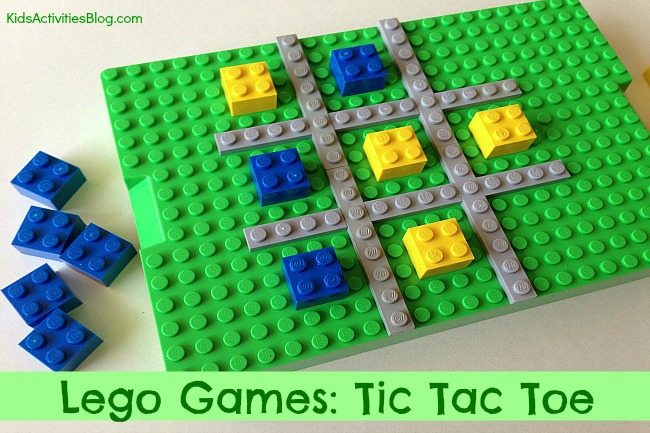
Duplo Pattern Towers Busy Bag @ AllOurDays.comLego Brick Tac Toe is one of the fun yet symple things you can do.

lego animal alphabet cards I - L
On this page you can find printable Duplo Pattern cards. But they can be used for regular legos too. There are quite a few of them and I just threw them into a zip lock bag. It was so nice to find something I could just print out. 


Are you looking for a way to make letters fun? Check out these great lego animals that a mother is creating to add a fun eliment to learning the alphabet. Visit her blog and print out letters A-T.

I also made my own lego counting sheet and a sheet for counting by 2's and 4's.

Along with these lego activities I have sent a 650 piece lego bricks bucket so they will have what they need for these activities.  I hope you enjoy this and feel free to tell others about my blog. :)


Friday, November 15, 2013

NaNoWriMo Woo Hoo!

Here I go again and it aint doin so well. Half was done with the month and i am only at 17,000 words of my 50,000. We shall see how I do.

Thursday, September 19, 2013

Little Men

So Little Men has got to be one of my favorites so far. It is up there with The Lonesome Gods and The Secret Garden. So many great lessons learned. I need to read it again and see how the Mrs. Bhear reacts to things better. I need to work on this. My boys learned a lot. If they apply it today... that is another question. I am taking a class online right now through Abigail Adams Academy and we have talked about doing character mapping. This is kind of like doing a web brain storm or a pedigree chart about the characters. You can just work on character relations. Or you can also note personality traits and take note of what made you believe this.

I wish I would have done this for this book because I found it a little hard to keep the kids all strait. Who are the biological children and who has what traits. What faults is Mrs. Bhear trying to refine in each child. There are just a whole lot of children to keep track of. We are not starting The Red Pony and I plan on doing character mapping with my kids with this book.

At the end of each book we love to sit down for movie night and watch the movie. I did not think we were going to get to do this for Little Men. But at Wal Mart I happen to run across the 1940 version. I was so excited and it was the final push I needed to get the kids to really sit still and want to finish the last few chapters. It is not a small book. We sat down with out no bake cookies and low and behold. The movie was nothing like the book at all. We were all disappointed. The characters had the same names and Dan had a bad attitude but that we about it. Mrs Bhear was a strong headed lady who talked to her husband as if he was an idiot and Nat was just in the back ground. They even changed Dan's back story. To say the least. Don't waist a second of your life on the movie. It is a waste. There was one done in 1934 but I do not know anything about it.


I just found out that there is another book after this one titled Jo's Boys(Alcott's 1886 novel) 

For tose of you who decide to read this wonderful book here is a little character help. As you can see...there are a lot of characters.

The Boys and Girls of Plumfield

  • Nathaniel "Nat" Blake: A twelve-year-old orphan, who lived as a street musician. He was discovered in a cellar by Mr. Laurence and brought to Plumfield. Although he has a habit of lying and is far behind the others in school at first, he is thoughtful, caring, and talented with a fiddle, quickly becoming one of the "favorites".
  • Daniel "Dan" Kean: A neglected fourteen-year-old orphan, who is brought to Plumfield by Nat. At first, he proves to be a rough, ill-mannered boy, who doesn't seem to trust or care about anyone, aside from Baby Teddy. After breaking nearly all the rules of the school, he is sent away, although later he finds his way back to Plumfield, where Mr. and Mrs. Bhaer take him in again, helping him become a kind and responsible person.
  • John "Demi" Brooke: John and Meg Brooke's nine-year-old son. Demi is scholarly, and would much rather read a book than play sports with the other children. He loves to spend time with his twin sister, Daisy, and his Grandpa March. He has been nicknamed "the deacon" and is very innocent and sweet, and is another one of the "favorites".
  • Margaret "Daisy" Brooke: John and Meg Brooke's nine-year-old daughter. She is Demi's twin sister, and loves her brother very much. Although she has many dolls that she lovingly cares and cooks for, she had to spend a lot of time alone because the boys wouldn't let her play games with them. Mrs. Jo tried to solve this problem by providing a miniature kitchen, but, later, Daisy's loneliness is primarily ended when Nan came to live at Plumfield. She is described as "sunshiny and charming" and delights in housework such as cooking, cleaning, washing, and sewing.
  • Thomas "Tommy" Bangs: An eleven-year-old boy who means well, but manages to get himself into some kind of trouble constantly. However, he is very well-tempered and friendly, and in spite of his many pranks and carelessness, he gets along well and is another "favorite".
  • Annie "Nan" Harding: A ten-year-old girl who is determined to prove that girls can do anything boys can. When her mother died, she ran wild, so her father readily agreed to send her to Plumfield when Mrs. Jo proposed the idea. She is quite skilled when it comes to caring for the boys' minor injuries and wants to become a doctor when she grows up, deciding she doesn't want any family to "fuss over", to Daisy's shock.
  • Robin "Rob" Bhaer: Mr. and Mrs. Bhaer's five-year-old son. He is attached to his mother and is very loyal to her. He also likes to be a part of the other children's activities, such as huckleberry picking.
  • Teddy Bhaer: Mr. and Mrs. Bhaer's two-year-old son.
  • Emil Hoffmann: A fourteen-year-old boy who is raised by his uncle, Mr. Bhaer. He has an intense love for the sea, and wants to be a sailor when he grows up. He is very determined, refusing to give up in a fistfight with Dan. Although he is guilty of having a bad temper, he is outgoing and friendly.
  • Franz Hoffmann: Emil's responsible sixteen-year-old brother. He goes on errands into town for the school until Dan takes the job. He is the oldest boy at Plumfield and helps Mr. Bhaer teach classes.
  • Ned Barker: A fourteen-year-old boy, called "Blunderbuss" because he regularly runs into, trips across, or knocks things over by accident. He likes to brag but isn't very brave and is described as someone that "could very easily be led astray".
  • Jack Ford: A twelve-year-old boy who was sent to Plumfield because it was cheap. He steals Tommy's money and allows Nat and then Dan to be blamed for the theft. After this uproar, he runs away, leaving a letter confessing that he was the thief. After Jack's uncle hears about these events, he thrashes Jack and forces him to return, not realizing that his nephew was only following the example he put forth.
  • George "Stuffy" Cole: A twelve-year-old boy, spoiled by his mother and her many sweetmeats. He is overweight, constantly talks about food and hates exercise.
  • Dick Brown: An eight-year-old boy with a crooked back. At first, some of the boys make fun of him, but then they learn to accept him. He is an amiable boy, so much that Demi solemnly asks if having a crooked back makes a person good.
  • Billy Ward: A mentally challenged thirteen-year-old boy. When younger he was remarkably intelligent, until an episode of brain fever. Although the Bhaers struggle to teach him things as simple as the alphabet, they continue to patiently and tirelessly work with him. Billy is especially fond of Nat and loves listening to him play the violin.
  • Adolphus "Dolly" Pettingill: An eight-year-old boy with a stutter. Mr. Bhaer tries to cure him of it by making him talk slowly.

Other characters[edit source | editbeta]

  • Josephine "Jo" Bhaer: The owner of the school and the "mother" to all of the children. She lives a very busy life, taking care of her husband, sons, and students at Plumfield, and visiting her mother and sisters. She is described as having a "merry sort of face" and rightly so, for she is cheerful person, still tempted to play the children's games.
  • Friedrich (Fritz) Bhaer: Mrs. Jo's husband, Rob and Teddy's father, and Franz and Emil's uncle. Originally from Germany, he is a kind-hearted, wise and caring man, taking the time to talk and spend time with each child as well as directing their education.
  • Theodore "Laurie/Teddy" Laurence: Amy's husband, and good friend of Jo, who is the only one allowed to call him "Teddy". He is a fun-loving, wealthy young man, and is very generous when it comes to the needs of the school and its students. He makes frequent visits to the school, usually taking his daughter Bess with him.
  • Elizabeth "Bess" Laurence: Laurie and Amy's five-year-old daughter, nicknamed "Goldilocks" or "Princess". She often visits Plumfield, where she is almost worshipped by the pupils. She lives a very sheltered life and is horrified by cruelty or dirtiness.
  • Asia: The cook employed at Plumfield. She is sometimes irritable but loves the children.
  • Mary Ann: A pretty maid employed at Plumfield.
  • Margaret "Meg" Brooke: Daisy, Demi, and Josie's mother, John Brooke's wife, and Mrs. Jo's oldest sister. She loves her family dearly, and quietly cares for each of them. 
  • Amy Laurence: Jo's youngest sister, Mr. Laurence's wife, and Bess's mother. A feisty character in "Little Women", she lacks any distinctive personality in "Little Men".
  • Josephine "Josie" Brooke: John and Meg Brooke's four-year-old daughter and Daisy and Demi's sister. She receives many hand-made clothing articles from Daisy.
  • John Brooke: Meg Brooke's husband and Demi, Daisy, and Josie's father. 

Tuesday, September 10, 2013